 Live
Live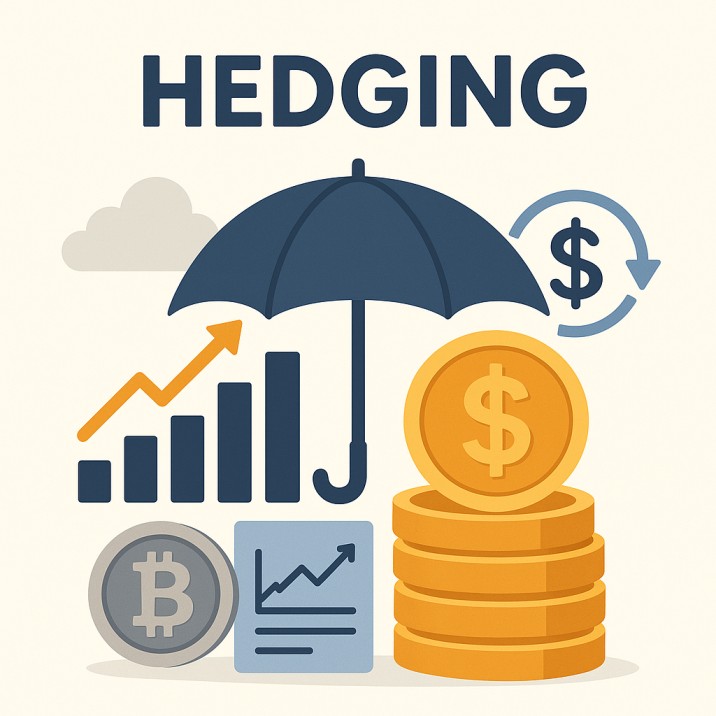
Imagine sailing through unpredictable market waves — calm one moment, stormy the next. Now, picture having a safety net that keeps your ship steady even when the winds turn rough. That’s exactly what hedging does for investors. It’s not just about chasing profits — it’s about protecting what you’ve already earned.
In this blog, we’ll explore what hedging really means, how it works, and why it’s a must-have strategy for anyone serious about managing risk and building a stable, long-term portfolio.
The Concept of Hedging
Think of hedging as financial insurance. Just like you insure your house against fire or theft, hedging protects your investments from sudden market downturns. It doesn’t prevent market fluctuations, but it reduces their impact on your wealth.
For example, if you own a large number of shares in a company, a put option can protect you from potential price drops. Similarly, businesses trading internationally often use forward contracts to lock in exchange rates, shielding themselves from currency volatility.
In India, where market swings can be influenced by policy changes, global trends, or geopolitical events, hedging plays a crucial role. It helps investors and traders balance risk with reward — minimizing losses while leaving room for potential gains.
What Hedging Means in the Stock Market
At its core, hedging is about buying one asset to offset the risk of another. It’s a way to bring stability to your investments and reduce uncertainty.
For instance, an investor may hold shares of a technology company but simultaneously purchase a put option for the same stock. If the stock price falls, the option gains value, compensating for some of the losses. Hedging is essentially about protecting your wealth while still participating in the market.
Understanding Hedge Funds
Hedge funds are a type of investment fund managed by professionals who use advanced strategies to deliver high returns. Unlike typical mutual funds, hedge funds have the flexibility to invest across stocks, bonds, real estate, or even unique assets like patents or music rights.
Some hedge funds focus on improving private businesses and eventually taking them public through IPOs. Others specialize in trading commodities, currencies, or bonds. The main goal? Maximize returns while managing risks smartly.
Common Hedging Methods
There are several ways to hedge, depending on the type of risk you want to manage. The most common methods include:
1. Forward Contracts
A private agreement to buy or sell an asset at a fixed price on a future date. Commonly used for currencies and commodities, it locks in prices and reduces uncertainty.
2. Futures Contracts
Standardized agreements traded on exchanges, functioning like forward contracts but more regulated. Investors use them to protect against price fluctuations in stocks, commodities, or indices.
3. Money Market Hedge
Involves short-term borrowing and lending to protect against currency or interest rate swings. Especially useful for companies dealing in foreign currencies.
Transitioning from methods to strategies helps us understand practical implementation…
Key Hedging Strategies
Investors and Asset Management Companies (AMCs) use different strategies to shield portfolios. Here’s a practical overview:
1. Forward Contracts
Businesses hedge currency risks by locking in exchange rates today, avoiding potential losses from depreciation tomorrow.
2. Futures Contracts
Traders sell or buy standardized contracts to manage price swings. For example, selling futures can offset potential stock losses.
3. Options
Options give the right, not the obligation, to buy or sell an asset at a set price. A put option protects against falling stock prices, while a call option can hedge the risk of missing out on price gains.
4. Currency Hedging
Companies trading globally stabilize returns using forwards, futures, or options, protecting against volatile exchange rates.
5. Commodity Hedging
Farmers or traders lock in commodity prices via futures contracts to secure predictable income. For instance, a wheat farmer selling futures today ensures a guaranteed price regardless of market swings.
6. Portfolio Diversification
Spreading investments across stocks, bonds, and real estate reduces dependency on one asset. Losses in one area may be balanced by gains in another, creating resilience.
Benefits and Risks of Hedging
Benefits
- Risk Reduction: Limits losses from sudden price movements.
- Portfolio Protection: Shields investments during market volatility.
- Predictable Costs: Helps businesses plan by locking in prices or exchange rates.
- Flexibility: Hedging instruments suit various risks, from stocks to currencies.
- Enhanced Confidence: Enables informed risk-taking.
- Liquidity & Stability: Supports overall market health and diversified investments.
Risks
- Cost: Options, futures, or other hedges often involve premiums or fees.
- Limited Gains: Hedging reduces losses but may cap profits.
- Complexity: Effective hedging requires financial knowledge.
- Counterparty Risk: Other parties in contracts may default.
- Market Uncertainty: No hedge is perfect; unexpected events can still cause losses.
Real-World Examples of Hedging
- Stock Market: Buying put options to guard against falling share prices.
- Currency Risk: Exporters locking in exchange rates through forwards or futures.
- Commodity Markets: Farmers selling crop futures to secure fixed prices before harvest.
In each case, hedging acts like a shield — giving control over unpredictable outcomes.
Bottomline
Hedging isn’t just a financial tactic; it’s a mindset. It acts as a safety net during market turbulence, helping investors protect their portfolio, manage risks, and make confident decisions. While it comes with costs and requires planning, hedging ultimately strengthens long-term financial stability.
For anyone serious about investing or trading, understanding and applying hedging strategies isn’t optional — it’s essential. Think of it as building your portfolio’s seatbelt: you may never need it every day, but when you do, it makes all the difference.
Ready to invest like a pro? Unicorn Signals app equips you with 100+ Free tools and knowledge you need to succeed. Download the Unicorn Signals app and gain access to daily stock lists and insightful market analysis and much more!