 Live
Live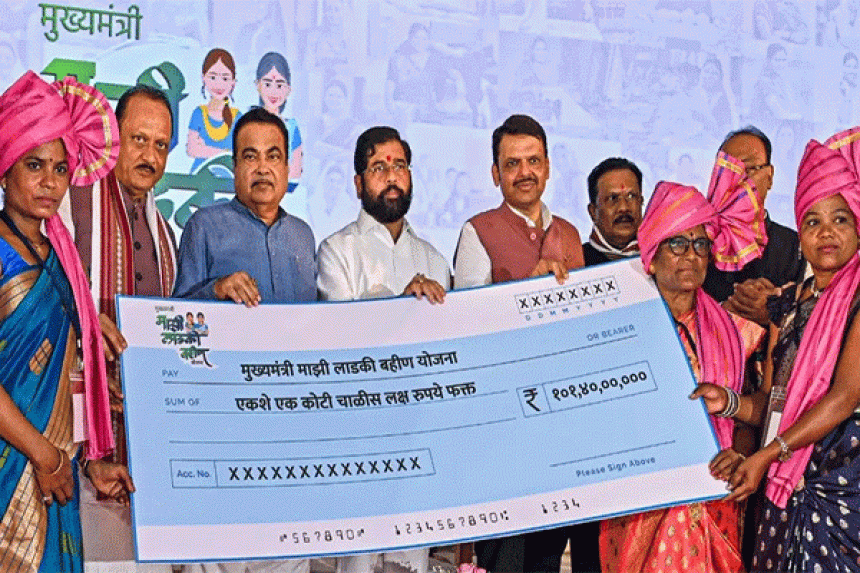
Women-focused cash transfer schemes are rapidly reshaping state budgets across India. A new report by PRS Legislative Research reveals that 12 states will together spend Rs 1.68 lakh crore on such programmes in 2025-26. This represents a sharp jump from just two states three years ago.
These unconditional cash transfer (UCT) schemes, offering monthly payments of Rs 1,000–1,500 to women from low-income households, have become a cornerstone of welfare politics. Flagship initiatives include Tamil Nadu’s Kalaignar Magalir Urimai Thogai Thittam, Madhya Pradesh’s Ladli Behna Yojana, and Karnataka’s Gruha Lakshmi scheme.
However, the surge in spending is putting fiscal pressure on the government. Six of the 12 states running these schemes are projected to post revenue deficits this year. Adjusted data shows Karnataka would swing from a 0.6% deficit to a 0.3% surplus if UCT spending were excluded. Meanwhile, Madhya Pradesh’s surplus would improve from 0.4% to 1.1%.
States like Assam and West Bengal have raised allocations sharply — up 31% and 15%, respectively. This underscores the growing political and social weight of women’s cash welfare programmes. But the RBI has cautioned that expanding such subsidies could squeeze funds for productive investments.
Some states are already tweaking benefits to contain costs. For instance, Maharashtra trimmed payouts under its Ladki Bahin Yojana this year. Conversely, Jharkhand raised monthly support under the Maiyan Samman Yojana to Rs 2,500 in late 2024.
Unicorn Signals leverages advanced AI technology to provide you with powerful market predictions and actionable stock scans. Download the app today and 10x your trading & investing journey!