 Live
Live
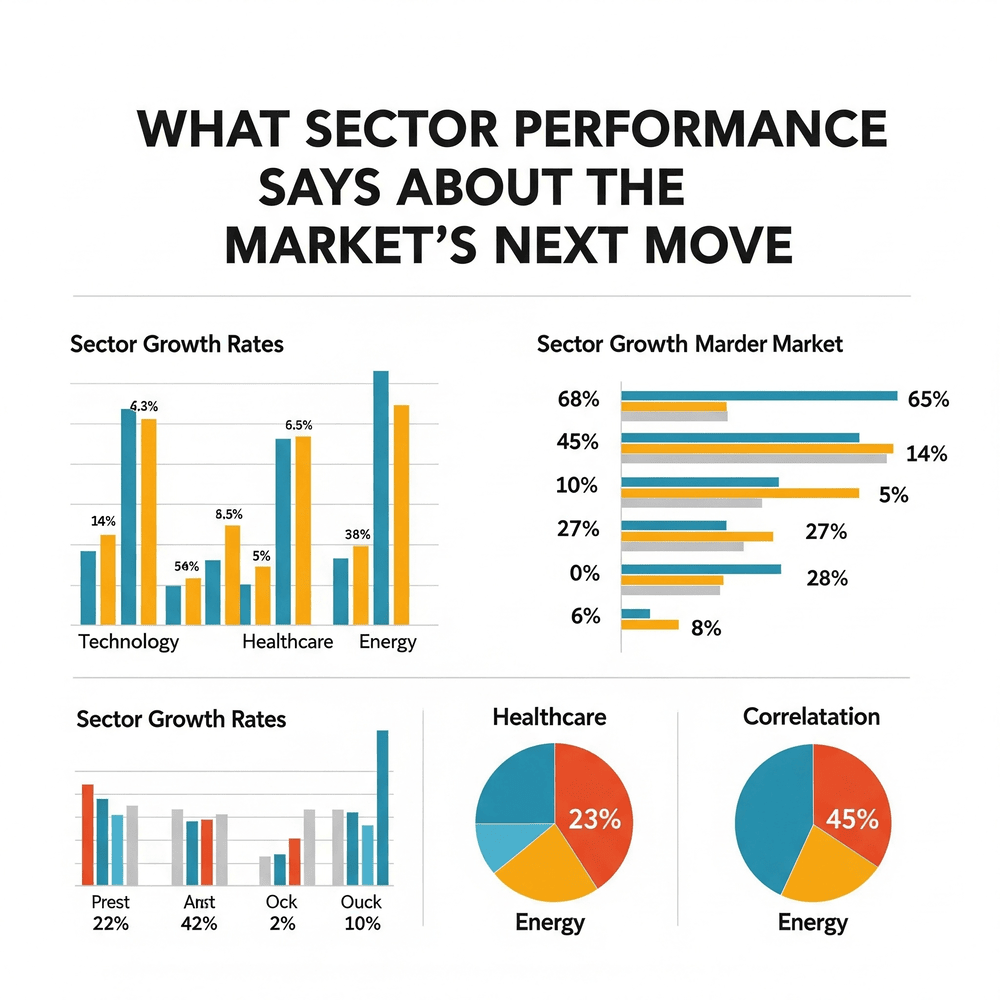
The modern financial world operates at a rapid pace which demands deep analysis of market signals and growth prospects beyond surface-level reading. A retail investor along with finance enthusiasts and professional traders need to comprehend the relationship between sector performance and equity trends while considering their impacts on the economy to gain useful investment knowledge.
The market puzzle has transformed into a three-dimensional chessboard. Movement in one sector generates chain reactions that affect various parts of the investment domain. The key to being ahead involves mastering the practice of monitoring financial operations through a specific industry perspective.
Why Sector Performance Matters More Than Ever
The economy’s condition becomes visible through the performance of the four main sectors that include technology, energy, consumer goods and healthcare. When the tech sector experiences rapid growth through innovation-driven development it indicates positive economic activity.
An increase in energy stock prices serves as a potential warning about inflation or geopolitical issues.
When discretionary consumer spending experiences a surge it typically corresponds to growing household income and economic confidence.
The economic temperature gets measured by the performance of different sectors. Those investors who understand this data can improve their capital distribution while steering clear of expensive blunders.
The Anatomy of Financial Activity
Financial activity is the term for the broader pattern that includes every trade, dollar invested, and volume dip or spike. When this activity is tracked across sectors, it reveals sentiment and market psychology.
It operates as follows:
Monitoring Flow and Volume:
Unusually high trading volume in particular industries may indicate institutional interest. A rise in risk aversion could be indicated, for instance, by increased financial activity in defensive industries like utilities and consumer staples.
Perusing. Intermittent Rotations
Investors moving their funds from one sector to another, known as sector rotation, frequently comes before more significant market trends. Moving from growth to value stocks could be a sign of impending macroeconomic changes, such as a slowdown in earnings growth or tighter monetary policy.
How Equity Trends Tell a Bigger Story
The economy’s condition becomes visible through the performance of the four main sectors that include technology, energy, consumer goods and healthcare. When the tech sector experiences rapid growth through innovation-driven development it indicates positive economic activity.
- An increase in energy stock prices serves as a potential warning about inflation or geopolitical issues.
- When discretionary consumer spending experiences a surge it typically corresponds to growing household income and economic confidence.
The economic temperature gets measured by the performance of different sectors. Those investors who understand this data can improve their capital distribution while steering clear of expensive blunders.
Economic Indicators That Complement Sector Analysis
Sector performance isn’t just a standalone concept; it’s deeply intertwined with macroeconomic indicators like:
- GDP Growth Rates : A robust GDP often gives a boost to cyclical sectors, such as industrials and consumer discretionary.
- Interest Rates: When interest rates rise, tech and growth stocks typically take a hit, while financials tend to thrive.
- Inflation Data: High inflation can elevate commodity-driven sectors but can also squeeze margins in consumer goods.
By layering these metrics with equity trends, you can refine your predictions about where the market might head next..
Why Retail Investors Must Watch Sector Movements Closely
Retail investors used to place a lot of emphasis on picking individual stocks. Ignoring sector performance is like flying blind, even though that is still relevant. Here’s why it matters:
- Diversification of risks: You can strategically diversify not only across businesses but also across industries with varying risk profiles by using sector tracking.
- Investing with Momentum: You can ride the wave instead of missing it if you can spot sectors that are gaining traction.
- Long-Term Placement: During specific periods of the economic cycle, certain sectors perform better than others. Early detection of these changes enables more intelligent long-term positioning.
Real-World Examples: Reading the Signals
Think about the early 2022 energy sector. Rising oil prices and geopolitical tensions were accompanied by a surge in financial activity and steady upward equity trends. While some investors were taken by surprise, those who paid attention to these indicators profited from a robust rally.
Consider the healthcare industry at the height of the pandemic, which is a prime example of how strong market activity and consistent sector outperformance generated investment opportunities in the face of greater uncertainty.
How to Incorporate Sector Monitoring into Your Strategy
Make Use of Sector ETFs as Reference: They give you an overview of the performance of the entire sector and assist you in determining investor sentiment.
Create Financial Activity Alerts: Tracking unusual volume or price movements in sectors is possible with platforms such as Bloomberg, Yahoo Finance, and TradingView.
Examine Earnings Reports by Sector: Transcripts of quarterly earnings calls can reveal patterns before they make the news.
Maintain Uniformity in Market Recaps: Sector analysis is included in the comprehensive market commentary provided by platforms such as EquityPandit. Include it in your everyday schedule.
Conclusion: Make Smarter Moves Through Sector Intelligence
Looking at the market as a monolith is no longer an option for the modern investor. It is a dynamic organism that is influenced by equity patterns, sector rotations, and hourly fluctuations in financial activity. By concentrating on sector performance and monitoring equity trends, you’re reading the market’s blueprint rather than merely responding to it.
Knowing the subtleties of market sectors can act as a compass in today’s volatile financial landscape, regardless of your level of experience as a trader or your desire to bolster your portfolio. You will be closer to matching your investments with real economic indicators rather than just news stories if you are more deliberate in how you interpret data.