 Live
Live
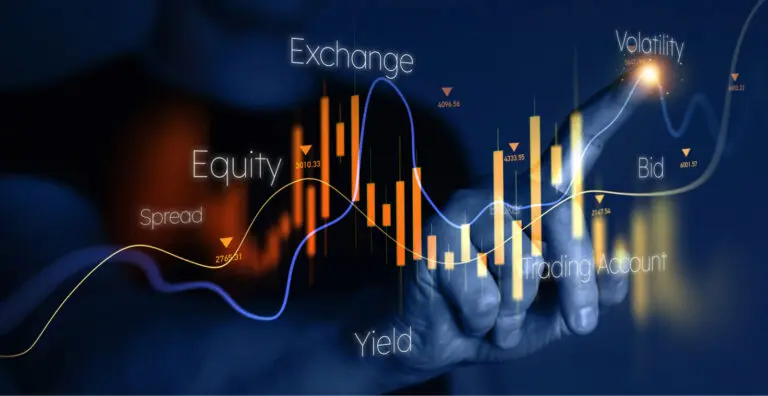
In the ever-evolving and dynamic trading scenario, getting hold of these key terms becomes very important for an informed decision and, at best, for navigating the markets. As the year 2025 resounds with change after another, new ideas and new ways of trading are also introduced in the arena. This thorough guide covers both fundamental and modern trading terminologies every trader ought to know in order to trade successfully in contemporary markets.
1. Equity
Equity refers to an ownership stake in a business as shown via shares. When buying a share of a company to which you are entitled some profits or assets, part of that company now belongs to you. Understanding equity forms the foundation of stock trading.
2. Bid and Ask Prices
The bid price represents the maximum amount a buyer is willing to pay for a particular security, whereas the ask price is the lowest amount a seller is prepared to accept. The gap between these two prices, known as the spread, serves as an indicator of the asset’s liquidity.
3. Spread
The spread is the difference between the bid and ask prices of a security. A narrower spread often indicates higher liquidity and less volatility, making it easier to execute trades at desired prices.
4. Market Order
A market order is an instruction to buy or sell a security immediately at the best available current price. This type of order ensures quick execution but does not guarantee the exact price, especially in volatile markets.
5. Limit Order
A limit order specifies the exact price at which you are willing to buy or sell a security. For a buy limit order, the trade will only execute at or below the specified price; for a sell limit order, it will execute at or above the specified price. This strategy provides price control but does not guarantee execution if the market doesn’t reach the desired price.
6. Stop-Loss Order
A stop-loss order is designed to limit an investor’s loss on a position by triggering a sale once the security reaches a predetermined price. This tool is essential for risk management, helping to protect capital from significant downturns.
7. Leverage
Leverage involves borrowing funds to increase the potential return on an investment. While it can amplify gains, it equally magnifies losses, making it a double-edged sword that requires careful consideration and management.
8. Margin
Margin refers to the collateral that an investor must deposit to cover the credit risk associated with leveraged trading. Trading on margin allows for larger positions but also comes with the risk of margin calls, where additional funds are required to maintain positions.
9. Volatility
Volatility measures the degree of variation in a security’s price over time. High volatility indicates significant price swings, presenting both opportunities and risks for traders. Understanding volatility is crucial for assessing the risk and potential reward of trades.
10. Liquidity
The term liquidity refers to how quickly any asset can be acquired or sold in the stock market without affecting the price. Highly liquid assets tend to yield smoother transactions and are generally considered lower-risk investments.
11. Bull Market versus Bear Market
Bull and bear markets refer to opposing points in time for markets and asset prices, one in which everything is moving up with optimism and the other in which prices are set on the decline with pessimism. Traders surely benefit from understanding these market conditions as strategies can then be aligned with these conditions.
12. Short Selling
The act of short selling consists of selling a borrowed security at its current price in the market with the intention of buying the same security back at a lower price sometime in the future. Such an approach gains profit during those times when the market is down but is quite risky should the price go up instead.
13. Futures and Options (F&O)
Futures are contracts that bind a buyer and a seller to transactions on a predetermined future date and time. Options, however, give the holder the right but not the obligation to value an allowable price up to a certain date in the future. Both are derivatives and have accordingly been utilized for hedging or speculative purposes.
14. Candlestick Patterns
Candlestick patterns are graphic techniques in technical analysis that display the high, low, open, and close prices of a security for a set period of time. Pattern recognition: Doji, Hammer, or Engulfing can help predict future directional price movement.
Conclusion
Understanding these trading terms is essential for anyone intending to make successful stock market dealings in 2025, whether you are a novice or an old hand. Having a clear comprehension of these issues makes one a smarter trader, capable of making informed operating decisions, managing genuinely assessed risks, and maximizing real returns. The financial market is a continuously evolving place; being current with the carefully changing trends and terminologies will resume unfolding an edge in the highly competitive locus.
Even so, this is a great starting point; beyond that, continuous education, discipline, and good financial management are other factors that help you succeed in trading. The unpredictability can be a lot at times, but with the right trading knowledge, one is better placed to forge their way forward with confidence. As we begin to draw towards 2025, be sure to also catch up on the most recent occurrences in the financial sectors. Apply both your theoretical and practical knowledge to enhance your trading skills with more strategic investment ideas. Keep learning!
Unlock profitable opportunities every day! Unicorn Signals provides actionable intraday trading signals for stocks and futures. Don’t miss out – download Unicorn Signals and start winning now!