 Live

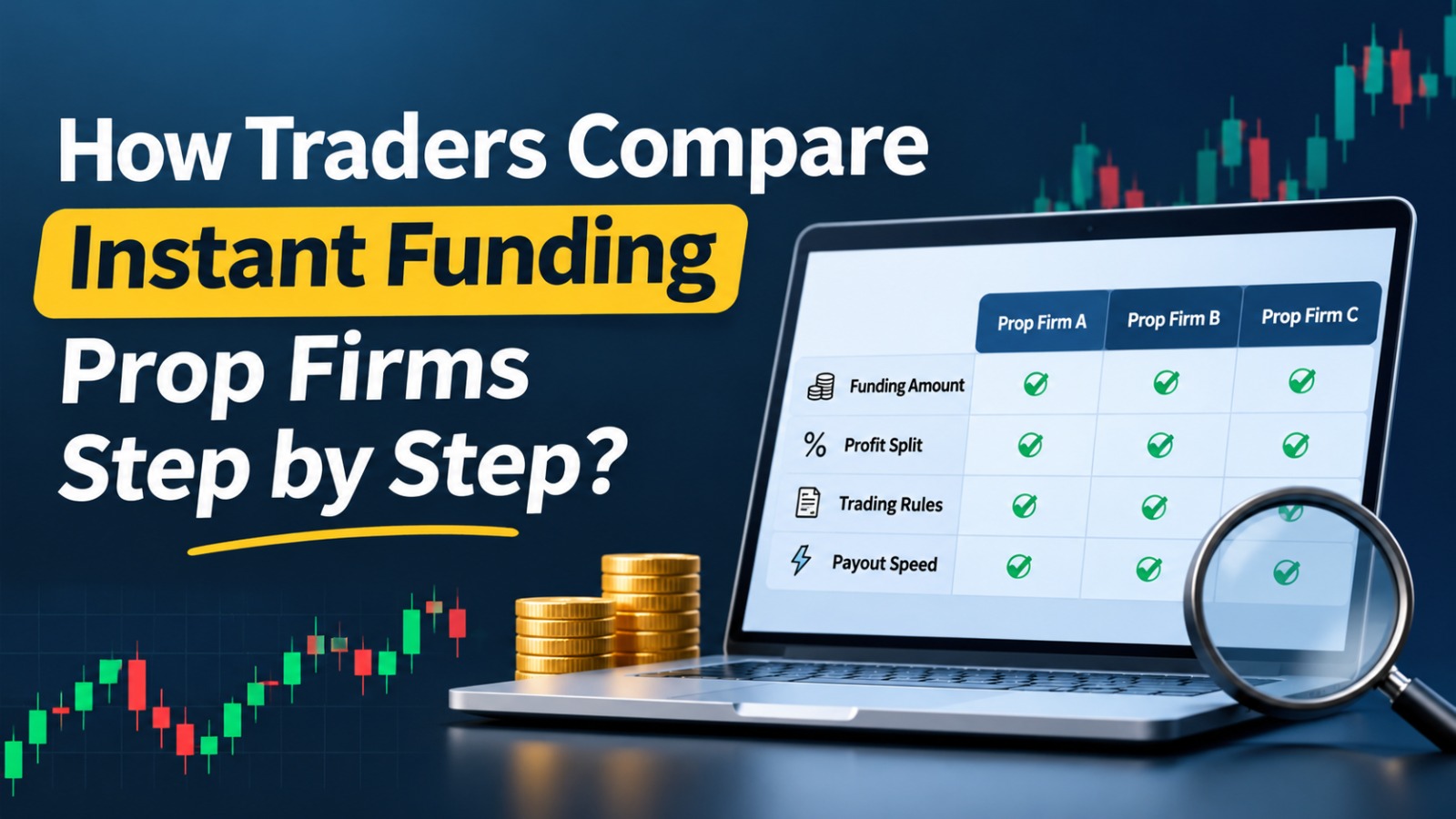
Instant funding hands a trader a live funded account without the multi-stage evaluation, and that is the whole appeal. It also invites a bad assumption: skipping the challenge does not mean every applicant gets in, because each firm still sets its own fees, account rules, and risk restrictions. Anyone weighing the best Instant funding prop firms needs more than a glance at account size or an advertised profit split.
Step 1: Check the Initial Funding Offer and Eligibility Criteria
Start with what the firm actually hands over on day one. The advertised balance is not always the capital a trader can use, since part of it may unlock only after profit targets are met. Compare available account sizes, the initial capital allocation, and funding eligibility criteria such as country restrictions and age limits. Then look at the account activation process:
- Payment method and upfront fee
- Identity verification steps
- Documents required and typical approval time
Build a simple comparison sheet that records account size, upfront fee, activation requirements, and eligibility for every candidate. Run it across the top Instant Funding Prop Firms and the gaps show up fast. Short version: if a firm is vague here, expect vagueness elsewhere.
Step 2: Compare Drawdown Limits and Daily Loss Rules
This is where most instant accounts fail. Maximum drawdown limits set the total loss an account can absorb, and the daily loss threshold caps the damage in a single session. Trailing drawdown rules need extra attention: depending on the firm’s calculation, the loss floor may rise as balance or equity rises, which shrinks the buffer after a winning run. Also check what the limit is measured against.
A rule tied to equity counts open trades and unrealized profit and loss, while one tied to closed balance does not.
| Rule type | How it works | Main risk |
| Static drawdown | Fixed floor based on starting balance | Lower flexibility on small accounts |
| Trailing drawdown | Floor follows peak equity or balance | Gives back room after winning streaks |
| Daily loss threshold | Resets each trading day | Easy to breach during volatile sessions |
Step 3: Evaluate Profit Splits, Fees, and Payout Conditions
- Profit split structure: Check whether the advertised percentage depends on account type, performance, or paid upgrades.
- Payout frequency and minimums: Weekly, biweekly, or monthly cycles change cash flow, and minimum withdrawal amounts can delay the first payout.
- Withdrawal conditions: Look for waiting periods, minimum trading days, and consistency requirements that must be met before a request is accepted.
- Ongoing costs: Recurring fees, commissions, and spreads all reduce net earnings, so compare them alongside the split.
- Reading comparisons carefully: Any list of best Instant Funding Prop Firms Compared should show net outcomes, not only the percentage. A 90% split with strict withdrawal conditions can pay less in practice than an 80% split with simple ones.
Step 4: Review Trading Rules and Platform Compatibility
A firm can look great on paper and still clash with how a trader actually operates. Begin with trading platform compatibility, available instruments, execution conditions, and trading costs, since a mismatch there changes results before a single rule is tested. Then check permitted trading strategies before buying anything.
News trading restrictions often block entries around major releases, overnight position rules and weekend holding limits may force early exits, and some firms restrict scalping, automated trading, or expert advisors.
Two firms can advertise nearly identical funding offers and still impose very different restrictions, which is why the complete rulebook deserves a full read. Firms whose policies match the trader’s normal style should move to the top of the list.
Step 5: Examine Evaluation Requirements and Account Scaling
Instant funding skips the classic challenge, but it rarely skips every hurdle. Confirm whether the firm gives direct access or still attaches evaluation requirements, and separate immediate eligibility from the conditions for keeping and growing the account. Compare:
- Minimum trading days before a payout
- Consistency rules that cap how much one day can contribute to total profit
- Performance targets, if any
- Account scaling options and the milestones needed for a larger allocation
Growth only helps when the rules grow with it. A bigger allocation paired with tighter risk management parameters can leave a trader with more capital and less room to use it.
Step 6: Verify the Firm’s Terms Before Making a Decision
Read the latest official rules instead of leaning entirely on reviews or comparison articles, which can lag behind rule changes. Go through the funding agreement terms, the trader verification process, payout policies, and account termination conditions. Then test the human side: customer support availability, complaint patterns, and how clearly the firm publishes its policies.
A transparent rulebook and understandable payout conditions say more than unsupported claims about reliability. Finally, weigh total cost and risk restrictions together, never separately. This step also settles how to choose an instant funding prop firm when two options look identical on price. The clearer contract usually wins.
Conclusion:
A sound instant funding prop firm evaluation covers funding eligibility, drawdown rules, payout conditions, trading restrictions, scaling opportunities, and contract terms, in that order. The most suitable firm is not necessarily the one with the largest account or the highest profit split.
Shortlist a few candidates, compare their official rules side by side, and pick the one that fits the trader’s strategy and risk tolerance.