 Live
Live
Ever seen a stock suddenly shoot up or crash through the floor — and wondered what just happened? Understanding breakout stocks can provide some insight into these dramatic market moves.
That’s the world of breakouts and breakdowns, where prices don’t just move — they break free from their past. These aren’t just random swings. They often mark the beginning of major trends, and for smart traders, spotting them early can be a game changer. Whether you’re chasing momentum or bracing for reversals, understanding how to track these powerful price moves can be the difference between riding the wave or watching it crash past.
Let’s break it down (and up) to see how these patterns work — and why so many traders swear by them.
Understanding Breakout Stocks
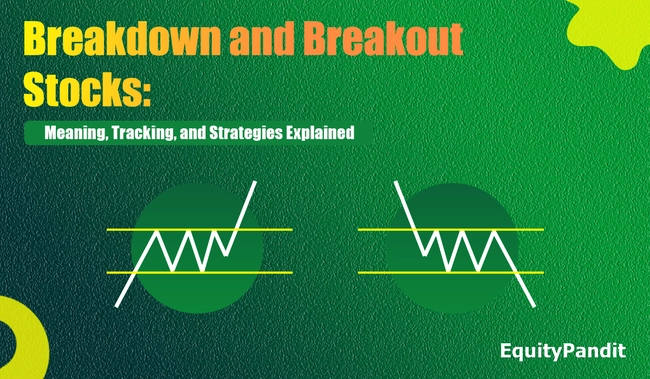
A breakout stock is one that moves sharply above a key resistance level on the chart. Think of resistance as a ceiling. When a stock breaks through it, it often signals rising demand and the potential for an upward trend.
For example, imagine a stock stuck around Rs 100 for weeks. Suddenly, it surges to Rs 110 with strong volume — that’s a breakout. Traders see this as a green light to buy, expecting the upward move to continue.
Now, flip the scenario: if a stock falls below a strong support level, it’s called a breakdown stock. Support is like a floor — once it gives way, the stock can tumble fast.
So, the meaning of breakout and breakdown stocks boils down to this: they break past levels where price was previously stuck, either up or down, and often kick off powerful trends.
Why Do Traders Love Breakout Trading?
Breakout trading is like catching a rocket just as it launches. Here’s why traders are drawn to it:
- Early entry into big moves: You spot the shift right as it happens.
- Clear entry and exit points: The breakout level often doubles as a marker for stop-loss and targets.
- Momentum advantage: Once a stock gains momentum, it can move quickly — giving traders a head start.
- It works both ways: Whether it’s a breakout or breakdown, opportunities exist in both uptrends and downtrends.
Common Pitfalls of Breakout Trading You Should Know
Breakout trading isn’t foolproof. Here’s where things can go wrong:
- False breakouts: Sometimes, the price just peeks above resistance, then drops back. You enter, and it reverses on you.
- Weak momentum: Not all breakouts have follow-through. The move might fizzle out, leading to small or no profits.
- Risk of chasing: If you’re late to the breakout, you might be buying the top.
That’s why tracking breakout and breakdown stocks carefully is crucial. Tools like volume spikes, moving averages, and historical price action help confirm whether the move is real.
So, How to Trade a Breakout? Step-by-Step
Here’s a simple breakdown:
Step 1: Scan for setup
Look for stocks with strong support and resistance zones. The longer the stock has respected that zone, the more powerful the breakout could be.
Step 2: Wait for the break
Don’t jump early. Wait for the candle to close above resistance (or below support in case of a breakdown).
Step 3: Confirm with volume
Higher trading volume adds strength to the move. It signals real buyer/seller interest.
Step 4: Set your target and stop-loss
Know your exit before you enter. Use the range between support and resistance to estimate potential upside or downside.
Step 5: Watch the retest
Many breakouts return to the breakout level before taking off. If it holds, it confirms the new trend.
Step 6: Lock profits smartly
Once your target is hit, exit. Don’t let greed undo a good trade.
What Is Breakdown Trading and How Does It Work?
Just like a breakout signals a potential rise, breakdown trading alerts traders to a likely fall.
A breakdown stock falls below a key support level, and that can spark a sharper drop. For instance, if a stock’s support level was Rs 90 and it crashes to Rs 85 on high volume, it often indicates more downside ahead.
Breakdowns often come with a spike in volume and are tracked using indicators like moving averages and RSI (Relative Strength Index) to judge if the fall has legs.
How to trade a breakdown?
- Enter short or sell when support breaks with strong volume.
- Place a stop-loss just above the old support to manage risk.
- Watch for pauses or rebounds — these might signal a good point to exit or adjust.
Patterns That Signal Breakouts or Breakdowns
Recognizing chart patterns is often the first clue when tracking breakout and breakdown stocks. Here are some patterns worth knowing:
- Cup-and-Handle: Often signals a bullish breakout.
- Triple Top: Points to a potential breakdown.
- Descending Triangle: Common before a fall.
- Falling Wedge: Usually bullish.
- Inverse Head-and-Shoulders: A powerful reversal pattern for a breakout.
- Flag Formation: A continuation signal after a sharp move.
- Double Top: Can lead to a breakdown.
- Symmetrical Triangle: Could break out in either direction, but usually signals a big move.
Learning to read these patterns lets you act faster and more confidently.
Breakout vs Breakdown: What’s the Real Difference?
The difference lies in direction and sentiment:
- A breakout is price breaking above resistance, suggesting growing demand and positive sentiment.
- A breakdown is price falling below support, signaling weakness and possible panic selling.
Both setups can be profitable. The key is to confirm the move, manage your risk, and avoid jumping in too early.
Bottomline
Breakout and breakdown stocks are not random blips. They’re signals — and when read right, they can offer solid opportunities. Whether you’re looking to ride the next wave up or spot a fall before it deepens, understanding what is breakout in the share market, how to track them, and how to act on them is vital.
But don’t forget: not every breakout stock is a winner, and not every breakdown stock is doomed. The trick lies in confirmation, discipline, and a solid strategy.
Break free from guesswork. Trade the levels.
Frequently Asked Questions (FAQs)
1. What is a breakout stock?
A breakout stock is one that moves above a significant resistance level, often triggering a strong upward price trend.
2. How do I track breakout and breakdown stocks?
Use tools like chart patterns, volume analysis, and indicators like RSI and moving averages. Look for strong price levels where the stock has previously struggled.
3. What is the difference between a breakout and a breakdown in the share market?
A breakout happens when prices rise above resistance, while a breakdown occurs when prices fall below support — both signal major potential trend shifts.
Curious About A Stock? Ask the Analyst.
Ready to invest like a pro? Unicorn Signals app equips you with 100+ Free tools and knowledge you need to succeed. Download the Unicorn Signals app and gain access to daily stock lists and insightful market analysis and much more!