 Live
Live
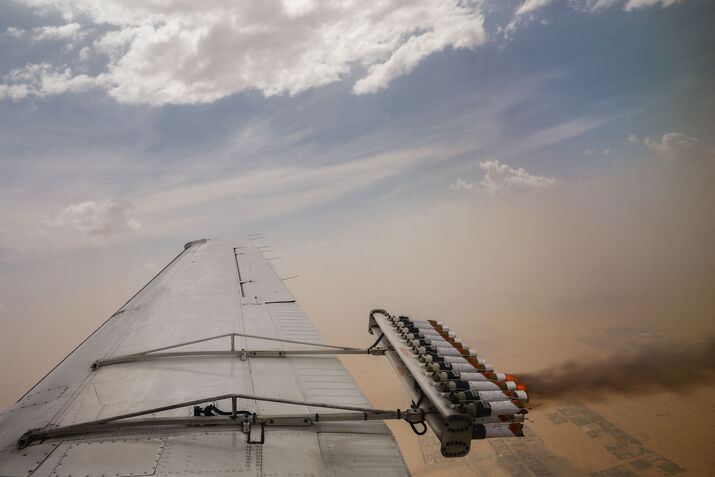
Delhi’s much-hyped cloud-seeding experiment has hit a wall. The trials failed to trigger any artificial rain despite worsening pollution levels in the city. The India Meteorological Department (IMD) confirmed that no rainfall occurred after the exercise, which was carried out jointly by the Delhi government and IIT-Kanpur.
The trials were conducted in areas such as Burari, Karol Bagh, Mayur Vihar, and Badli. They are part of a Rs 3.2 crore initiative. The goal is to test whether artificial rain can help clean Delhi’s toxic air. So far, three out of five planned trials have been completed. All were unsuccessful.
Experts say the main culprit was poor weather support. The moisture content in clouds was only around 10–15%, far below the 50–60% needed for seeding to work. Even on cloudy days, humidity remained too low for rain formation.
Despite the lack of rainfall, officials claimed that particulate matter (PM 2.5 and PM 10) levels in the test areas showed a minor dip after the trials. However, environmentalists have dismissed cloud seeding as a temporary fix. It does little to address Delhi’s core pollution sources.
Experts warn that while such experiments may offer brief relief, long-term improvement depends on tackling emissions. This includes those from vehicles, industry, and construction — the real drivers of Delhi’s toxic air.
Unicorn Signals leverages advanced AI technology to provide you with powerful market predictions and actionable stock scans. Download the app today and 10x your trading & investing journey!