 Live
Live
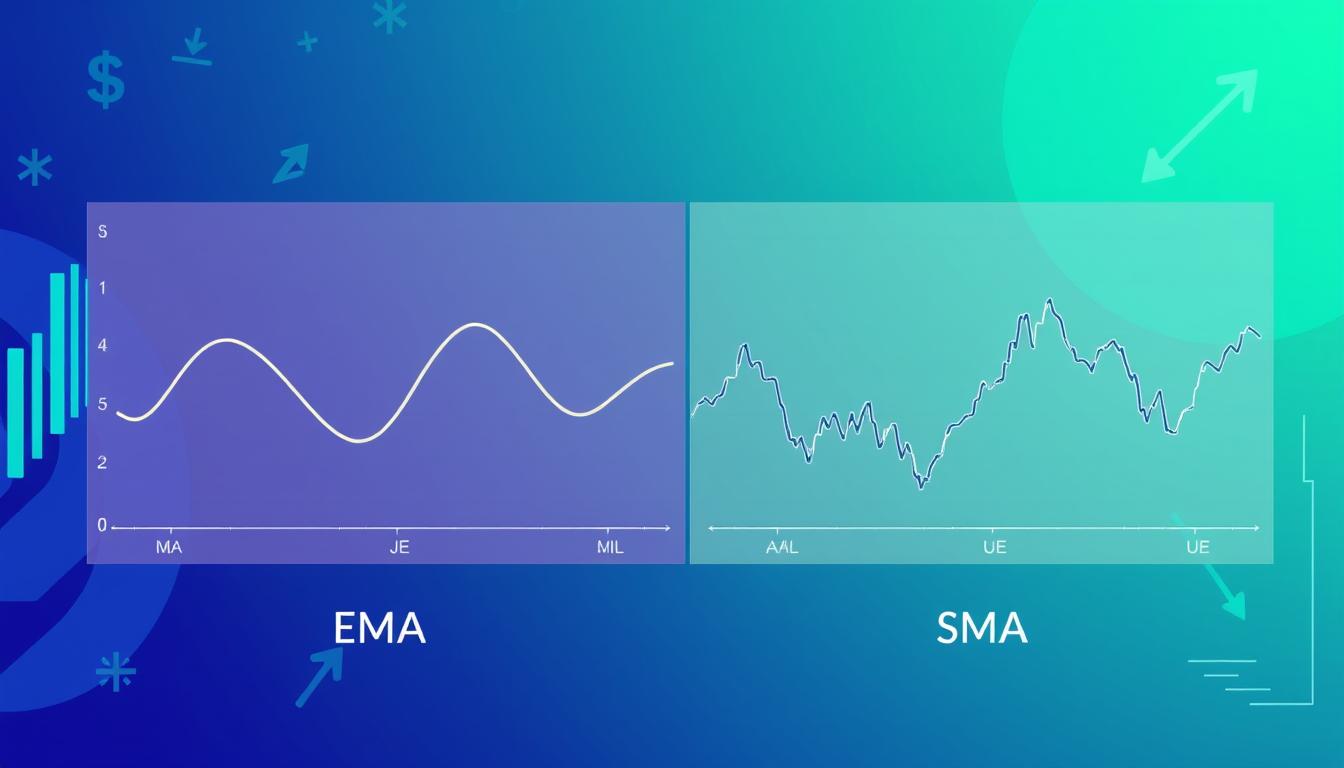
Moving averages are essential in technical analysis to show market trends and help traders make informed decisions. Among the various moving averages, the Simple Moving Average (SMA) and the Exponential Moving Average (EMA) are two of the most commonly used. Knowing the differences, advantages, and applications will enable a trader to choose one moving average that will suit his trading strategy.
What is a Moving Average?
A moving average is a statistical measure to smooth price data by calculations over a period to diminish short-run fluctuations and thereby recognize the trends in a better way. Moving averages help traders in identifying support and resistance levels, confirming trend directions, and developing trading strategies.
What is the Simple Moving Average (SMA)?
The Simple Moving Average (SMA) calculates an average price for a specified number of periods, giving equal weight to all data points. For instance, 10-day SMA means the sum of all closing prices of the last 10 days divided by 10. This gives one data point that is plotted on a graph, forming a continuous line of overall price movement.
What is the Exponential Moving Average (EMA)?
The EMA assigns more weight to recent prices than older prices, allowing it to become more sensitive to recent price action. In general, due to its very nature, EMA reacts faster than SMA to changes in price, hence making it more useful for traders looking to catch short-term market trends.
Key Differences Between SMA and EMA
| Feature | Simple Moving Average (SMA) | Exponential Moving Average (EMA) |
| Calculation | Equal weight to all data points | More weight to recent data |
| Responsiveness | Slower response to price changes | Faster response to price changes |
| Lag Time | Higher (delayed signals) | Lower (quicker signals) |
| Best Use Cases | Long-term trend analysis | Short-term trading and volatility |
| Sensitivity | Less sensitive to price fluctuations | More sensitive to price fluctuations |
Advantages and Disadvantages
Advantages of SMA:
- It provides a smoother trend and reduces market noise.
- Works well for identifying long-term trends.
- Less prone to false signals caused by short-term fluctuations.
Disadvantages of SMA:
- Slower to react to recent price movements, which may delay trade signals.
- It may not be as effective in fast-moving markets.
Advantages of EMA:
- Reacts faster to price movements, providing timely signals.
- Helps traders identify trend reversals quickly.
- More suitable for volatile markets.
Disadvantages of EMA:
- More prone to false signals due to its sensitivity to recent price changes.
- This can lead to overtrading if used without confirmation from other indicators.
Which Moving Average Works Best?
SMA or EMA is a matter of choice depending upon the trading style and objectives:
- Long-Term Investor: For this group, the SMA is often more preferred as it usually provides more stable view regarding trends that are long-term and is less sensitive to short-term fluctuations in the market.
- Short-Term Traders: Emphasizes EMA as it reflects appropriately the recent price changes and even gives traders the timing to benefit from the short-term movements.
- Swing Traders: Both SMA and EMA could be combined to determine vital levels and confirm trends.
Practical Application of SMA and EMA in Trading
- Moving Average Crossovers: Many traders tend to use a combination of short-term and long-term moving averages in order to generate buy and sell signals. For example:
- Bullish crossover indicates a short-term EMA (say 10-day) crosses above the long-term SMA (say 50-day), pointing to a future uptrend.
- A bearish crossover indicates that this short-term EMA crosses below the long-term SMA, signalling a future probable downtrend.
- Support and Resistance Levels: Moving averages usually represent dynamic support and resistance. Price were mostly bounced off moving average which made them valuable for entry and exit points.
- Trend Identification: Prices generally above a moving average indicate an uptrend, whereas the price tends to be under, showing a downtrend.
- Market Noise Filtering: Longer-period SMAs tend to market more noise in the filter, which would give a clearer view of the whole market direction.
Conclusion
In both cases, the selection purely depends on the trading objectives of the day. There are SMA and an EMA, both of which can be pretty useful in different ways. Long Term Investment-it is a steady analysis for long-term investment, SMA should be used for those. On the other hand, the EMA is preferred for such types of trades by investors who trade shortly and expect a quick signal from an indicator.
Many traders would combine both of the above needs together to get the best out of them. You must have a better understanding of how SMA and EMA work if you wish to fully maximize your time trading strategically and be informed, thus increasing your chances of being successful in the financial markets.
Feeling overwhelmed by the markets? Let Unicorn Signals be your guide. Our user-friendly app simplifies complex data and provides actionable trading signals. Download the app today and trade with confidence!