 Live
Live
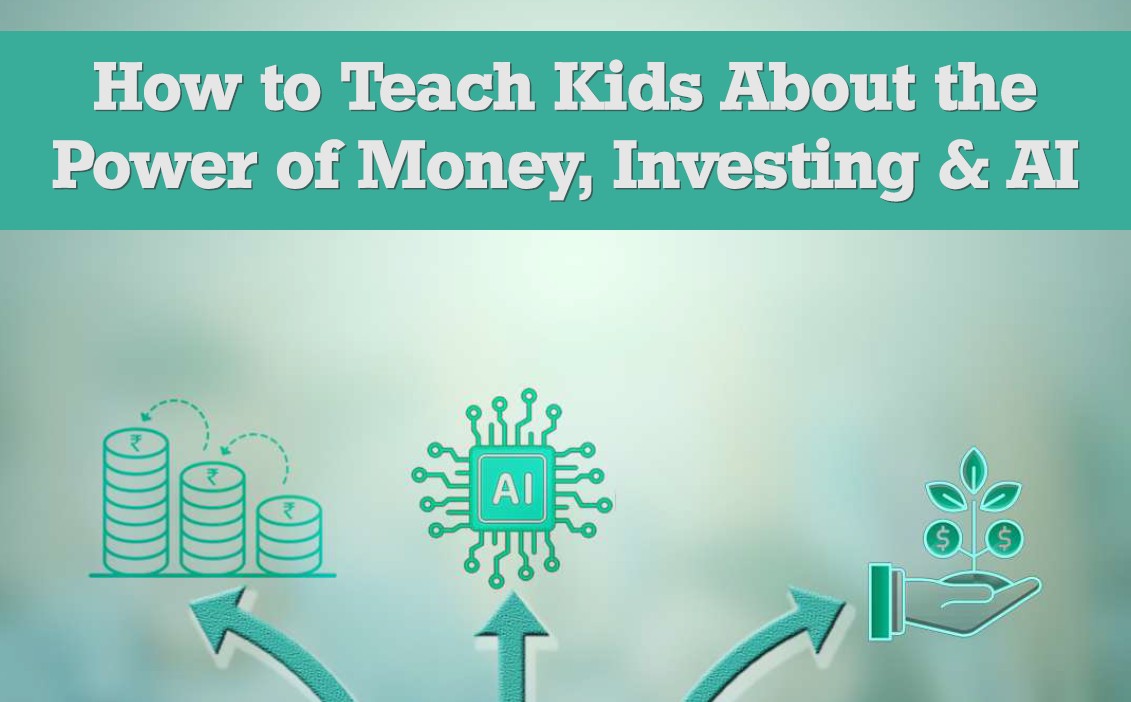
In today’s fast-changing world, understanding money, investing, and technology is no longer optional, but it’s essential. Financial literacy, once thought of as a skill for adults, needs to begin in childhood. According to the OECD, only about 34% of adults worldwide are financially literate, which means most people struggle with basic financial decisions. If we want the next generation to be more prepared, we need to start early.
But financial education in 2025 cannot stop at saving and spending. With Artificial Intelligence (AI) transforming industries and even reshaping personal finance, children must learn not only the value of money but also how AI can influence investing, saving, and everyday decision-making. By introducing these lessons early, we prepare kids to become confident, informed, and adaptable adults.
Teaching the Basics of Money
Children as young as six can begin to grasp simple concepts like spending, saving, and budgeting. Parents can introduce this through everyday activities: comparing prices at the grocery store, dividing money into “needs” and “wants,” or even using a piggy bank to show the value of saving.
Storytelling can also be powerful. Books and stories about saving or earning money make abstract ideas more relatable. For example, if a child receives a weekly allowance, parents can encourage them to save a portion, spend a portion, and even set aside a “giving” portion. This not only builds math skills but also helps them understand that money is a tool—one that requires thoughtful use.
Introducing the World of Investing
Once kids understand basic money management, the next step is introducing investing. Children today are surrounded by brands they already know and love—whether it’s Disney, Coca-Cola, or Apple. Parents can use this familiarity to explain that these companies are publicly traded, and by buying shares, people can become partial owners.
Rather than explaining investing in purely theoretical terms, a hands-on approach works best. Setting up a mock stock portfolio, playing stock market games, or even opening a small custodial account with real money can make the concept come alive. For instance, if a child invests $100 in a stock and sees it grow over time, they begin to understand compounding and long-term wealth creation.
It’s also important to teach caution. With Gen Z entering the stock market as early as 19—often influenced by AI-powered apps or social media trends—children must learn the difference between smart investing and risky speculation, such as meme stocks or cryptocurrencies.
Learning Through Autonomy and Real-Life Consequences
Children often learn best when they are given freedom to make choices—and mistakes. An allowance system is an excellent way to let them experiment. If they spend all their money too quickly, they’ll learn the consequences of running out before the next allowance. If they save, they’ll see the rewards of delayed gratification.
This same principle can apply to investing. A parent might allow a child to “choose” one stock for their custodial account, guiding the discussion but letting the child make the final decision. This sense of autonomy builds confidence and instils responsibility. Over time, these lessons add up, helping kids avoid bigger mistakes as adults.
The Role of AI in Financial Education
Artificial Intelligence is becoming an inseparable part of financial decision-making. From AI-powered budgeting apps to robo-advisors that help manage investments, kids growing up today will live in a world where AI often guides financial choices. Teaching them how AI works—its strengths and limitations—is crucial. AI can make learning fun and personal. Apps and other AI-driven platforms can adjust lessons to a child’s age, turning financial literacy into a game. Investment simulators powered by AI can help kids explore risk, reward, and diversification in a safe environment. However, parents must also highlight the importance of scepticism—AI is a tool, not a substitute for critical thinking.
Schools and Global Initiatives
While parents play a central role, schools and global initiatives also support financial education. In India, for example, the National Centre for Financial Education (NCFE) integrates money lessons into the school curriculum, covering topics from digital payments to compounding. Globally, Global Money Week encourages children to engage in debates, stock market visits, and fun financial activities. Organisations like Aflatoun, working in over 100 countries, combine social skills with financial education, teaching children not only how to save but also how to run small businesses. These efforts highlight that financial literacy isn’t just a household responsibility, but it’s a global movement.
Reinforcing Lessons Through Real-Life Projects
Perhaps the most effective way to teach money is through projects. Some schools in the U.S. allow students to manage mock portfolios worth thousands of dollars, giving them real exposure to investing decisions. At home, children can run small entrepreneurial ventures like a lemonade stand, an online shop, or even a mini-budget for a family event. These activities teach important concepts like cost, profit, reinvestment, and risk. When coupled with AI-based tools that provide personalised insights, children gain both traditional financial wisdom and modern tech-savvy skills.
Conclusion
Teaching kids about the power of money, investing, and AI is about much more than financial success, but it’s about building confidence, responsibility, and adaptability. By starting early with simple money concepts, gradually introducing investing, encouraging autonomy, and using AI as an interactive learning tool, we can prepare the next generation for a financially empowered future. The earlier we start, the stronger their foundation will be. After all, today’s children are tomorrow’s investors, innovators, and decision-makers. The lessons we teach them now will determine how wisely they manage not just their money, but also their future.
Discover the next big investment! Unicorn Signals’ IPO screener helps you identify promising initial public offerings. Download Unicorn Signals and get ahead of the curve! Sign Up Now & Find Your Next IPO Gem!