 Live
Live
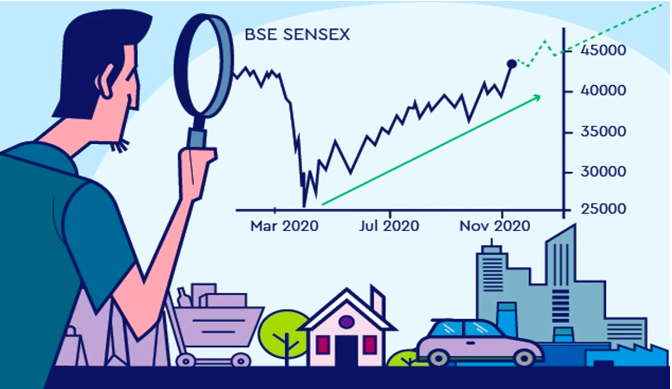
In an interconnected and fast-paced global economy, economic trends no longer remain distant metrics discussed only by policymakers and economists. They directly impact our everyday decisions from the price of groceries to how much we pay on our home loan EMIs or earn on fixed deposits. Understanding these trends is no more a luxury but is the need of the hour for anyone trying to build and maintain financial health.
This blog goes into supporting the recent developments in the economic situation and how they affect your personal finances. Whether you’re an investor, salaried professional, retiree, or student, this guide can aid in joining the dots of macroeconomic factors to a personal financing strategy.
1. Inflation
Inflation refers to a general increase in price levels of goods and services. An increase in inflation means that the purchasing power of money is going down. In April 2025, the CPI inflation rate in India stood at 2.92%, down from 3.25% in March. This moderation, therefore, gives some temporary relief to the consumers.
How it impacts you:
- Daily Expenses: A fall in inflation helps contain the cost of essentials like food, fuel, and utilities, making it easier to stick to a monthly budget.
- Investment Returns: Real returns (nominal return minus inflation) improve when inflation is under control. For instance, if your investment earns 7% and inflation is 3%, your real return is 4%.
- Wages: Persistent inflation without proportional wage growth erodes your disposable income. Understanding this can guide your salary negotiations and spending patterns.
2. Interest Rates
Interest rates affect both borrowers and savers. In April 2025, the Reserve Bank of India (RBI) reduced the repo rate by 25 basis points to 6.00% to encourage borrowing and investment.
How it impacts you:
- Loan EMIs: Lower interest rates decrease EMIs on home loans, personal loans, and car loans. For example, a 25 bps cut on a 20-year home loan of Rs 50 lakh could save you thousands in interest over the loan tenure.
- Fixed Deposits (FDs): On the flip side, banks often reduce FD rates following repo rate cuts. As of May 2025, top Indian banks offer interest rates ranging from 6.5% to 7.1% for deposits of 1 to 3 years.
- Investment Strategy: Falling interest rates can make equity and debt mutual funds more attractive than traditional fixed-income options. Consider realigning your portfolio accordingly.
3. GDP Growth
The Total of all goods and services produced in an economy is seen as GDP. Since higher GDPs are indicative of a healthy economic state, the probable Q1 2025 GDP growth for India around 6.8% indicates the strong momentum with which recovery is being pursued.
How it affects you:
- Employment: Higher GDP growth will undoubtedly lead to higher hiring and wage growth in sectors such as infrastructure, manufacturing, and technology.
- Equity Market: Expansion in economy raises corporate profits and hence stock prices. Persons investing monthly SIPs in equity mutual funds gain in the long term.
- Consumer Confidence: A growing economy is usually accompanied by a rise in consumer sentiment and, hence, consumer spending and investment activity.
4. Currency Fluctuations
The exchange rate of the Indian rupee vis-a-vis the dollar influences import costs, foreign travel, and investment decisions. On May 28, 2025, the rupee stood at 85.36 against the dollar, a position considered fairly stable amidst global uncertainties.
How it impacts you:
- Foreign Education & Travel: A weaker rupee means more expensive tuition and travel costs abroad. Parents planning for children’s foreign education should factor in currency buffers.
- Imported Goods: Electronics, crude oil, and other imports become costlier when the rupee weakens, indirectly affecting household budgets.
- NRI Investments: For NRIs, a weaker rupee means more returns when converting foreign earnings to INR, encouraging property and equity investments in India.
5. Government Policies and Schemes
Policy measures often act as economic safety nets. For example, recently the government approved an 8.25 percent interest rate on EPF balances for FY 2024-25. Also, subsidized loans to farmers will continue under the Modified Interest Subvention Scheme (MISS).
How this impacts you:
- EPF Contributions: Higher EPF interest rates mean more accumulation for retirement, adding more weight to the need for timely contributions.
- Subsidized Credit: Lower interest rates, as per targeted government programs, benefit farmers, rural families, and small business owners.
- Tax Benefits: With policy changes come tax benefits, such as deductions for premiums for health insurance, interest on home loans, or infrastructure bonds.
6. Market Movements and Investment Trends
As inflation cools and interest rates decline, Indian companies are tapping into the bond market. Since April 2025, Indian firms have raised nearly Rs 20 billion via short-term bonds, taking advantage of cheaper borrowing costs.
How it impacts you:
- Corporate Bonds: Investors can consider diversifying their portfolios with high-quality corporate bonds, which offer better returns than fixed deposits (FDs) but require a risk assessment.
- Stock Market Rally: With a total FII inflow of over Rs 23,000 crores in May 2025, Indian equities touched record highs and continued onward worldwide. Mutual fund and ETF investments are cost-effective options for retail investors to participate in this growth.
- Debt Funds: Since the interest rates are going down, debt funds would be able to show capital appreciation owing to a fall in bond yields.
7. Global Trends
Global macroeconomic trends, like interest rate decisions by the US Federal Reserve or manufacturing data from China, impact India.
How it affects you:
Global Market Volatility: Sudden shifts in policy globally can influence the FII behaviour in India, leading to stock market fluctuations. Diversify across geographies to hedge against global risks.
- Commodity and Gold Prices: At times of global uncertainty, prices of gold skyrocket. For fearful investors, gold ETFs or sovereign gold bonds complement their diversified portfolio well.
- Crypto Price Fluctuations: Increased valuations are increasingly tied to regulations beyond borders. So only invest carefully and only with leftover money.
Conclusion
These economic trends do not stand only as headlines, but as yardsticks that guide your financial journey. The more you’re familiar with inflation, interest rates, GDP growth, currency trends, and policy updates, the better the choices you make financially.
Here are a few takeaways to act on:
- Review your budget monthly to adjust for inflation.
- Diversify your investment portfolio across asset classes.
- Reassess loan tenures and refinance if interest rates drop.
- Keep an eye on government schemes that can offer financial benefits.
- Build an emergency fund to cushion against unexpected macroeconomic shifts.
Staying economically aware is no longer optional. It’s an essential tool for building a financially secure and resilient future.
Unlock profitable opportunities every day! Unicorn Signals provides actionable intraday trading signals for stocks and futures. Don’t miss out – download Unicorn Signals and start winning now!