 Live
Live
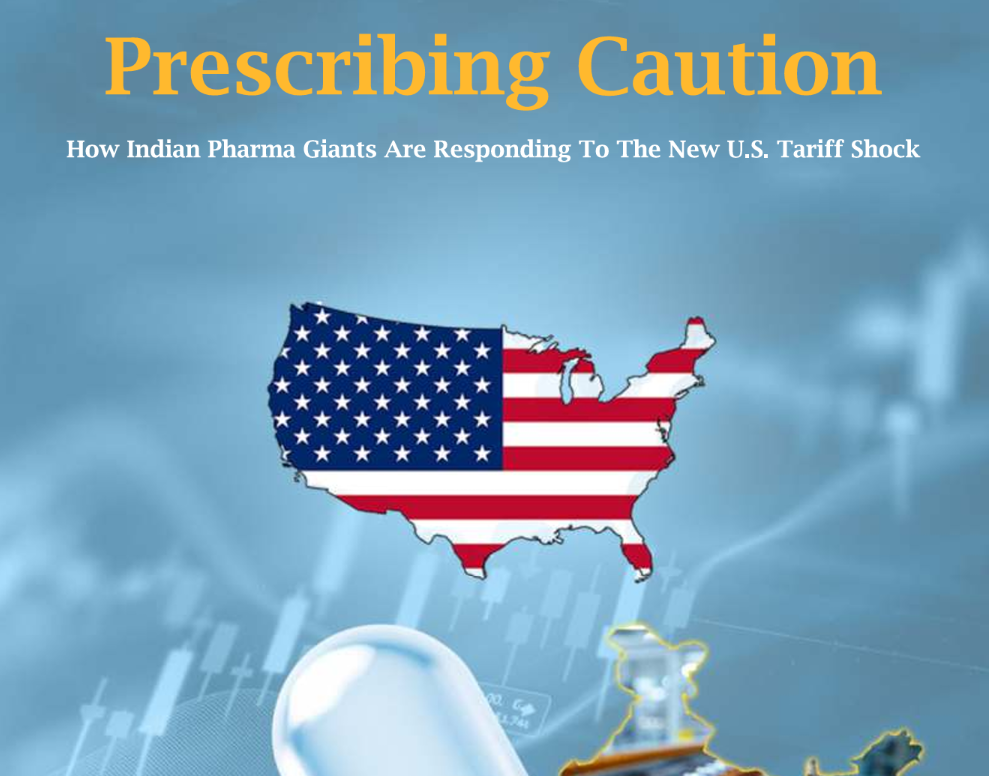
Donald Trump announced a phased tariff plan on generic drugs entering the United States on 22 July 2026, and Indian pharma stocks fell within hours of the post going up. The first instinct is to read that as a crisis, though the timeline itself makes a case for patience. Generic imports keep a 0% tariff until August 2028. After that, it climbs to 100% for a year before doubling again to 200% from 2029. It’s that gap between announcement and actual implementation that got lost under the first wave of headlines.
A more useful frame here is not India versus Washington, but a macroeconomic variable that global supply chains now have two years to price in. India already supplies close to 47% of every generic prescription filled in the United States, a share the market has not fully priced into these stock moves yet. That scale hands Indian manufacturers real weight at the table once trade discussions pick up before the deadline hits.
The API Bottleneck and the Pass-Through Effect
A tariff on finished generic drugs does not solve the supply chain problem sitting underneath it, and the reason comes down to where the actual chemistry gets made.
The Supply Chain Reality
Many of the active ingredients behind these medicines, common compounds like amoxicillin and heparin included, are sourced from China rather than made domestically in the U.S. Building a formulation plant in New Jersey does nothing for that dependency if the raw chemistry still has to travel from a Chinese facility first. Asking anyone to rebuild that entire chain inside 24 months is not realistic, not when pharmaceutical manufacturing is this specialised and this heavily regulated.
Who Ends Up Paying
Generic drug margins already run thin, typically somewhere between 10% and 20%. A tariff of 100% or 200% has nowhere to hide inside a margin that size. Dr Reddy’s CEO Erez Israeli has said as much directly, calling an overnight move to U.S. manufacturing impractical and warning that prices will rise if the tariff goes through. Follow that logic and the added cost lands on U.S. insurers, hospitals, and ultimately patients. Looked at this way, the tariff resembles a slow-building inflation problem for American healthcare more than a fatal blow to Indian exporters.
Corporate Margins and Pricing Power
Not every company sits at the same distance from this risk, and the difference comes down to how exposed each one already is.
Uneven Exposure Across the Sector
Lupin, Aurobindo Pharma, and Gland Pharma all draw a large share of revenue from North America, leaving them more sensitive to any disruption in pricing or contract terms. Dr Reddy’s puts North America at roughly a third of total sales, a concentration that offers little room to absorb a shock of this size quietly.
The Quiet Work of Contract Renegotiation
The underlying cost math still tilts in India’s favour, though. Indian generics typically sell for seven to ten times less than their branded equivalents, and that gap is wide enough that even a 100% tariff might not fully close the price edge over U.S. domestic production. Most companies will spend the two year window doing something less visible: renegotiating long-term supply contracts so more of the tariff burden sits with distributors and buyers rather than with them. It rarely makes headlines, but this quiet contract restructuring is where the real protection gets built.
A Catalyst for Consolidation
Not everyone is equally placed to absorb this shock, and that gap is likely to reshape the sector faster than the tariff itself.
The Capital Gap
Smaller pharmaceutical companies and component suppliers have a harder path ahead. Most lack the capital to build redundant manufacturing capacity or ride out a prolonged margin squeeze, so this kind of policy shock hits them harder than it hits the large, diversified players. Relocating or expanding U.S. manufacturing also means clearing FDA approvals, equipment validation, and stability testing, a process that can stretch four to seven years and requires capital most mid-sized firms don’t have lying around.
Where the Deals Are Heading
India’s outbound M&A activity across all sectors hit $18.7 billion in April 2026, the highest monthly deal value since May 2022, and Sun Pharma’s $11.75 billion purchase of Organon was the single largest transaction behind that surge. It’s the cash-rich pharma companies that stand to gain most, since they can afford to buy smaller firms with valuable pipelines or manufacturing licences. If anything, the tariff pressure looks set to speed up consolidation across the sector rather than squeeze every player equally.
Reading the Market’s First Reaction
The initial selloff came fast. The Nifty Pharma index slid close to 2%, and two names bore the brunt of it: Lupin ended down 2.27%, Aurobindo Pharma nearly 1.9%, both more exposed than most given how much they lean on U.S. generics. Nineteen of the twenty index constituents closed lower that day.
Worth remembering is that this reaction followed a social media post, not a finalized regulatory order. Markets often price in risk faster than the facts on the ground justify, and that is roughly what happened here. Share prices moved well ahead of any real change in earnings, since the tariff itself will not take effect until 2028. Even so, the selling did not stop after day one. Pharma stocks extended their decline into a second session as the formal order with the fine print stayed unpublished, a reminder that uncertainty alone can pressure prices for longer than the underlying news actually warrants.
Moving Up the Value Chain
The more lasting response from Indian pharma is strategic, not reactive. Companies are likely to keep drifting away from low-margin bulk generics and towards complex generics, biosimilars, and speciality products, the categories where margins can actually absorb higher costs without the whole thing becoming commercially unworkable. Sun Pharma’s Organon deal fits that pattern closely, pushing innovative medicines towards 27% of the company’s total revenue.
Alongside outright acquisitions, expect more contract manufacturing deals and technology transfer arrangements for higher-margin drugs inside the U.S., a route that builds a domestic presence without the cost of constructing an entire factory from the ground up.
Geopolitical Leverage and Diversification
There is a negotiating angle running underneath all of this too. The two year runway gives Indian trade officials time to push for concessions before the deadline arrives, and some analysts read the entire announcement as a negotiating tool aimed at broader trade commitments rather than a fixed, unchangeable policy. At the same time, Indian pharma companies are pushing further into Europe, Latin America, and other emerging markets, work that reduces how dependent the sector is on any single country’s trade decisions.
The Long-Term View
None of this undoes the structural strengths that built India’s pharma industry in the first place. The scale, the chemistry expertise, and the cost efficiency that made India the largest single supplier of generic medicines to the U.S. are still standing. What is shifting is the growth model underneath it, moving from volume-driven exports towards value-driven products that can absorb a policy shock like this one and keep going. The tariff number will likely matter less over the next two years than how quickly companies build around it.
The future of investing is here! Tradz by EquityPandit leverages advanced AI technology to provide you with powerful market predictions and actionable stock scans. Download the app today and 10x your trading & investing journey!