 Live
Live
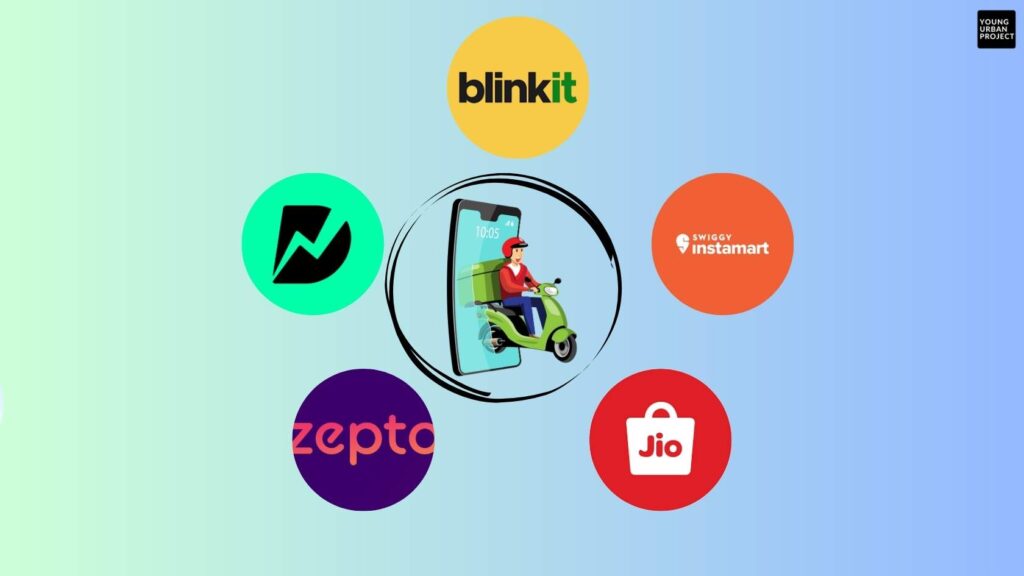
The retail landscape in India is undergoing a dramatic transformation, driven by technological advancements and evolving consumer expectations. At the forefront of this revolution is quick commerce, a new paradigm that promises to deliver everyday essentials to customers’ doorsteps within minutes. This emerging sector is reshaping how Indians shop, challenging traditional retail models, and creating exciting opportunities for businesses and consumers alike. Let’s explore the rise of quick commerce in India, its current state, and how it’s poised to redefine the future of retail in the world’s fastest-growing major economy.
Quick commerce, often referred to as q-commerce, represents the next evolution of e-commerce. It focuses on ultra-fast delivery, typically within 10-30 minutes, of a curated selection of products ranging from groceries and household items to electronics and personal care products. This model leverages a network of strategically located micro-fulfilment centres, known as dark stores, combined with an army of delivery personnel to achieve unprecedented speed and efficiency in order fulfilment.
As urban lifestyles become increasingly fast-paced and time-constrained, the demand for instant gratification in shopping has surged. Quick commerce addresses this need by offering unparalleled convenience and speed, making it an attractive proposition for busy professionals, young families, and tech-savvy consumers across India’s metropolitan areas.
The rapid emergence of quick commerce in India
Quick commerce in India is currently a booming sector due to evolving consumer behaviour and high investments by domestic and international players. Factors fuelling its popularity include:
- Urbanization and lifestyle changes: With more Indians flocking to cities and adopting busy lifestyles, the willingness to pay for time-saving and convenient offerings has expanded exponentially.
- Digital transformation: With the massive penetration of smartphones and affordable internet connectivity, consumers have readily adopted digital shopping solutions.
- COVID-19 Impact: The pandemic further pushed online shopping and contactless delivery, providing an excellent soil for quick commerce to flourish.
- Venture Capital Interest: These quick commerce enterprises have had access to substantial venture capital investment from large established powers in e-commerce, thus rapid growth and innovation.
- Improved Logistics Infrastructure: Betterment in last-mile delivery capabilities and inventory management systems have made ultra-fast deliveries more viable and economical.
The intersection of these considerations has certainly made an impeccable storm for quick commerce businesses to prosper in India, with recent industry estimates projecting the market to touch $5.5 billion by 2025.
Key Players Shaping Quick Commerce in India
The quick commerce sector in India is growingly becoming a highly contested space, with many well-funded startups and established e-commerce giants scrambling for a share of the market. These include:
- Blinkit (formerly Grofers): An early mover among Indian quick commerce ventures, Blinkit has since grown rapidly in major cities for 10-minute deliveries from its wide array of product offerings.
- Swiggy Instamart: Capitalizing on its food delivery platform, Swiggy is making inroads into quick commerce for instant deliveries in 15-30 minutes via Instamart.
- Dunzo: From hyperlocal deliveries, Dunzo switched to quick commerce, providing fast delivery for groceries and essentials to several cities.
- Zepto: A newcomer that has gained traction with its promise of 10-minute deliveries, Zepto has attracted substantial funding and is expanding aggressively across urban centres.
- BigBasket: The established online grocery player has entered the quick commerce fray through its BB Now service, hoping to capitalize on brand equity and knowledge of supply chains.
These players continue to find newer ways to innovate and diversify their offerings in order to place themselves ahead in this fast-changing business environment.
Impact on Traditional Retail and E-commerce
The rise in quick commerce creates ripples in the entire retail ecosystem in India and is thereby forcing both traditional brick-and-mortar retailers and long-established e-commerce players to adapt. Some of the core impacts will relate to:
- Changing demands of the customers: A volley of challenges is mounting on traditional retail and e-commerce platforms to fast-track their fulfilment speed with customers requesting rapid deliveries.
- Omni channel integration: Brick-and-mortar stores are increasingly exploring ways to leverage their physical presence for quick commerce, such as using stores as mini-fulfilment centres.
- Product assortment changes: Retailers are re-evaluating their product mix to focus on high-demand, fast-moving items that are well-suited for quick commerce.
- Investment in logistics: E-commerce giants are ramping up investments in their last-mile delivery capabilities to compete with quick commerce specialists.
- Partnerships and acquisitions: Some traditional retailers and e-commerce players are partnering with or acquiring quick commerce startups to quickly enter the market.
- Focus on hyperlocal: There’s an increased emphasis on hyperlocal strategies to cater to the specific needs and preferences of local communities.
- Tech adoption: Retailers across the board are accelerating their adoption of advanced technologies to improve operational efficiency and customer experience.
The quick commerce revolution is compelling the entire retail sector to innovate and adapt, ultimately leading to a more dynamic and customer-centric shopping ecosystem.
Consumer Behaviour and Adoption Trends
In India, the burgeoning industry of quick commerce has a notable influence on altering existing consumer behaviour. With quick deliveries leading the charge, buyers are increasingly becoming impulsive and shifting towards smaller-order fulfilment instead of outright bulk buying. Categories such as groceries and essentials still seem to rule the roost, but others, including electronics, personal care, and fashion, are beginning to catch on.
Quick commerce is rapidly becoming the number one choice for urgent needs. As customers get used to preferring quick deliveries, their rising expectations regarding speed and convenience create high platform loyalty based on reliability and service quality. Quick commerce players must visualize these consumer trends to develop further and nurture long-standing customer relationships.
Future Outlook in India
Several trends should define the future of quick commerce in India, and with quick commerce still on the rise, the possibilities look bright:
- Expansion to tier-2 and tier-3 cities: The success of the model in metros prompts players to turn their sights on smaller cities with emerging digital population cohorts.
- Increased use of automation: From robotic picking in dark stores to drone deliveries, automation will enhance efficiency.
- Personalization: AI and analytics will be applied to offer highly personalized product recommendations and shopping experiences.
- Integration with smart home devices: This entails enabling seamless ordering through voice-activated assistants and IoT-enabled appliances.
- Diversification of services: Quick-commerce platforms could extend into adjacent services such as meal kits, on-demand services, or specialized product categories.
- Consolidation: This means the market will experience mergers and acquisitions in an effort to achieve economies of scale and get expansive in reach.
- Focus on profitability: As the initial land-grab phase comes to a close, companies will begin focusing more on sustainable unit economics and profitability.
Conclusion: A New Era in India Retail
The rapid rise of quick commerce marks a significant milestone in India’s retail evolution, bringing together the convenience of e-commerce and the immediacy of traditional retail stores. As the sector continues to grow and mature, it promises to set changing consumer expectations, business models, and the overall retail landscape in India.
For businesses, quick commerce presents an opportunity and a challenge. Established retailers and e-commerce players must change to stay relevant; however, they are given the opportunity to claim their niches in this rapidly growing market. Their success will depend on technology, operational excellence, and staying relevant to fluid consumer expectations.
Consumers have untold convenience from quick commerce, which makes an unusually wide variety of products available to them at their fingertips. Yet, it raises questions about sustainable consumption patterns and the future well-being of traditional retail ecosystems.
As the adventure of quick commerce proceeds in India, it would be exciting to see how this spirited field encounters challenges, welcomes innovations, and alters the very way millions of citizens shop and live. Quick commerce is now penning down the future of retail in India at lightning speed.
Tired of missing hot stocks? Unicorn Signals provides powerful tools like stock scans and more help you make informed trading decisions. Download now and take control of your portfolio!