 Live
Live
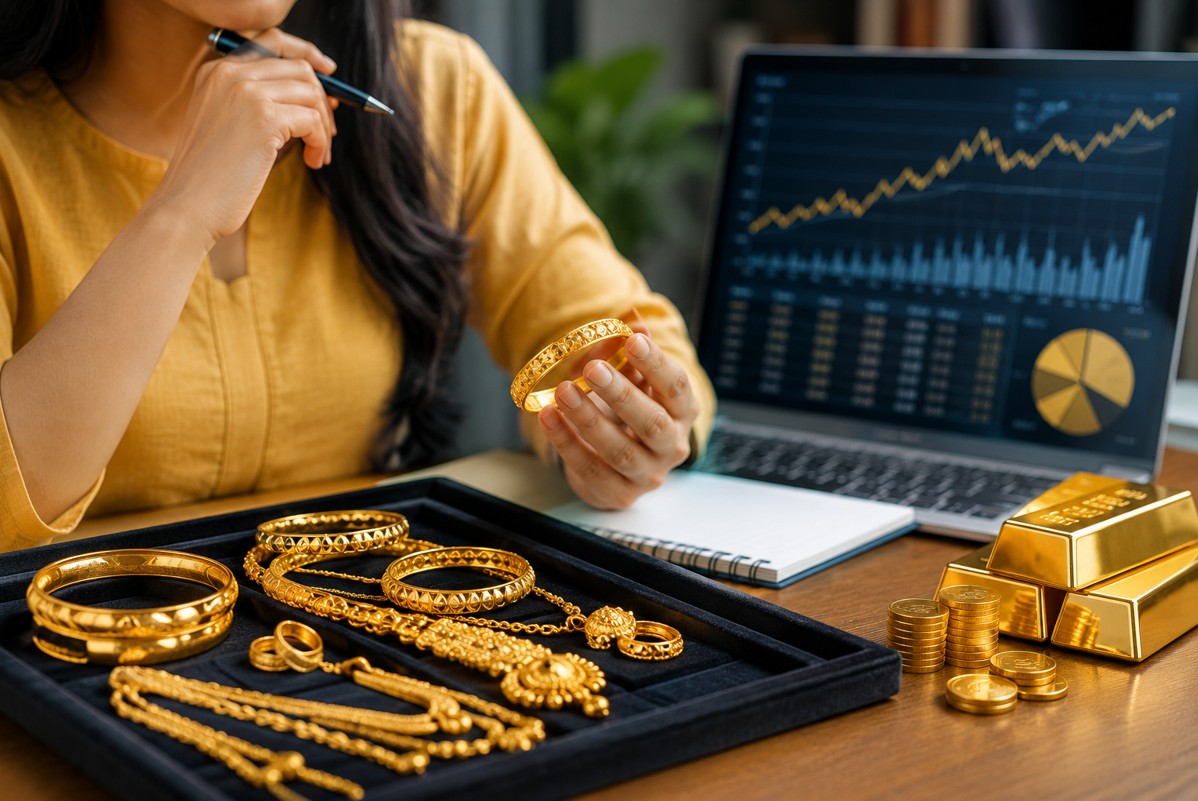
Whether purchasing jewellery for a wedding, investing in gold, or planning to pledge gold ornaments or coins for a future gold loan, understanding how gold prices work can help buyers make informed decisions. Customers tracking the gold rate in Bihar, or anywhere else in the country, can benefit from knowing what drives daily price movements, how local gold rates are determined, and what to consider before making a purchase.`
For many buyers, understanding gold rates is not only useful when purchasing gold but also when evaluating the value of existing gold for future financial needs, such as applying for a gold loan. Keeping track of trends like the gold rate in Bihar or other regions can provide better clarity on price fluctuations. Knowing how prices are determined can support better financial planning, regardless of where the purchase is made.
In Summary
Monitoring gold prices can be useful for:
- Comparing prices before purchasing jewellery or eligible gold coins.
- Planning purchases around weddings, festivals, or investment goals.
- Understanding how market movements affect gold prices.
- Estimating the value of existing gold before applying for a gold loan.
- Comparing pricing across jewellers before making a purchase.
Why do gold rates change every day?
Gold prices in India are influenced by a combination of global market trends and domestic factors. Since India imports a significant portion of its gold, changes in international prices often have a direct impact on local rates.
The main factors influencing daily gold rates include:
- International gold prices: Gold is traded in global commodity markets, making international prices the benchmark for domestic gold rates. Economic uncertainty, geopolitical events, and investor demand can all influence these prices.
- Currency exchange rates: Gold is traded globally in US dollars. Changes in the value of the Indian rupee against the US dollar affect the cost of importing gold, which in turn influences domestic prices.
- Government duties and taxes: Import duties, GST, and other applicable taxes contribute to the final price buyers pay for gold in India.
- Demand and supply: Gold demand typically rises during festivals, wedding seasons, and other auspicious occasions. Higher demand may influence prices in local markets.
- Local market conditions: Although gold prices generally follow national trends, buyers may notice slight variations across cities and states because of local operational costs and jeweller pricing.
Did You Know?
Gold prices are usually quoted per 10 grams for both 22K and 24K gold. However, the final price of jewellery also includes making charges and applicable GST, making the total purchase cost higher than the quoted gold rate.
What affects the final price you pay for gold?
The daily gold rate provides a useful benchmark, but it is not the only factor that determines the amount buyers pay. The final purchase price of gold jewellery is influenced by several additional components, many of which vary across jewellers.
| Component | What it means |
| Gold rate | The prevailing market price of gold, usually quoted per 10 grams. |
| Purity | The price varies depending on whether the jewellery is 22K, 18K, or another purity level. |
| Making charges | The cost of designing and crafting the jewellery. |
| GST | Applicable taxes charged on the purchase. |
| Other charges | Depending on the jeweller, additional charges may apply. |
Quick tip: Two jewellery pieces of the same weight can have different prices because of differences in purity, craftsmanship and making charges.
What buyers tracking the gold rate should know
For customers following the gold rate, it is helpful to look beyond the daily price and evaluate the overall purchase value. Before buying gold, remember to:
- Compare the latest gold rates from trusted sources.
- Check whether the jewellery is BIS hallmarked.
- Understand the purity of the gold being purchased.
- Compare making charges across jewellers.
- Ask for a detailed invoice with a complete price breakup.
- Review the jeweller’s exchange or buyback policy.
Looking beyond the purchase: Gold as a financial asset
Gold is often viewed as a long-term investment or a family asset. However, it can also provide access to funds when financial needs arise.
Instead of selling gold jewellery, ornaments or coins during emergencies or planned expenses, many customers choose to pledge eligible gold to obtain a gold loan while continuing to retain ownership of the asset, subject to repayment of the loan.
This makes the quality and purity of gold important not only at the time of purchase but also when it is used as collateral in the future.
How do gold rates affect gold loan valuation?
If you pledge eligible gold jewellery, ornaments or gold coins for a gold loan, the market price is only one part of the valuation process.
Gold prices in India are updated every morning using rates published by the India Bullion and Jewellers Association (IBJA). When assessing pledged gold, lenders such as Bajaj Finance use the lower of the previous day’s closing price or the 30-day average price published by IBJA or a SEBI-regulated commodity exchange. This approach helps reduce the impact of short-term price fluctuations and supports a fair and consistent valuation.
Lenders also consider:
- Purity of the pledged gold.
- Net gold weight after excluding stones or other materials.
- Applicable valuation methodology.
- Loan-to-Value (LTV) limits.
For customers considering a gold loan in Patna or elsewhere, monitoring prevailing gold prices can help them better understand current market conditions before visiting a branch for valuation. However, the final loan amount depends on the purity, net weight, and valuation of the pledged gold, along with the applicable lending guidelines.
Bajaj Finance Gold Loan: Supporting quick funding needs
For customers who require funds without selling their gold, the Bajaj Finance Gold Loan offers a borrowing solution against eligible gold jewellery, ornaments, and gold coins.
| Feature | Details |
| Loan amount | Rs. 5,000 to Rs. 2 crore |
| Interest rate | Starting from 9.50% p.a. |
| Tenure | 1 day to 12 months |
| Transparent valuation | Gold is evaluated using advanced karat meters and other valuation instruments for accurate assessment. |
| Repayment flexibility | Choose from multiple repayment options, including monthly, bi-monthly, quarterly, half-yearly, annual interest payments, or bullet repayment, as applicable. |
| Part-release facility | Repay part of your loan and take back a portion of your pledged eligible gold before loan maturity. |
| No part-prepayment or foreclosure fee* | Repay part or all of your loan before maturity without additional charges. |
| Free insurance of pledged gold | Pledged eligible gold is stored in secure vaults under 24×7 surveillance and covered by free insurance while in Bajaj Finance’s custody. |
Making smarter decisions
Keeping track of gold prices is about more than knowing today’s rate. Understanding the factors that influence gold prices, checking purity and hallmarking, and comparing the overall purchase cost can help you make better buying decisions.
If you are planning to borrow against eligible gold, knowing how lenders assess gold—based on prevailing prices, purity, net weight and applicable Loan-to-Value (LTV) guidelines, can also help you set realistic expectations about the loan amount you may be eligible for. Whether you are purchasing gold or using it to meet short-term financial needs, staying informed can help you make more confident financial decisions.